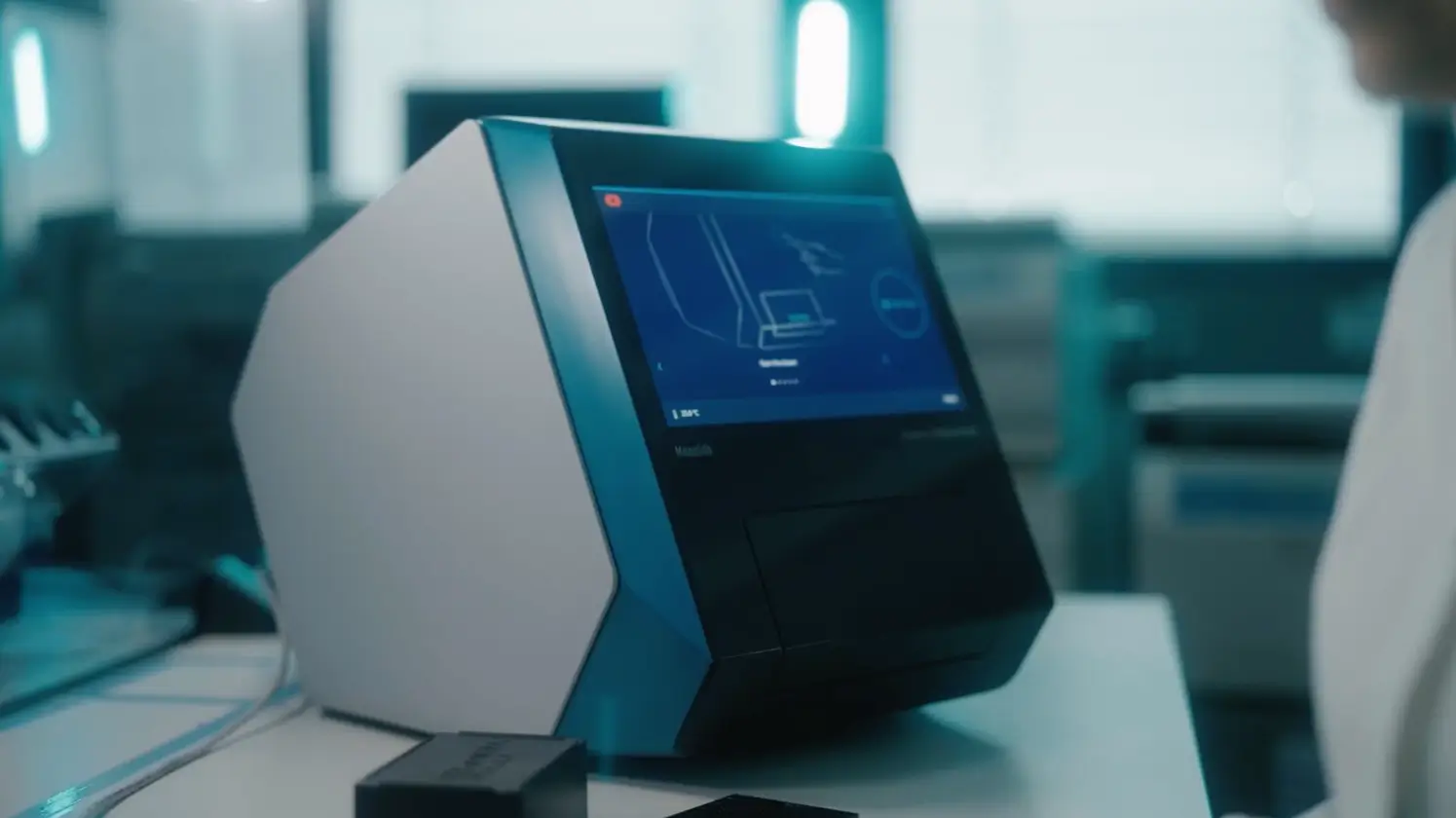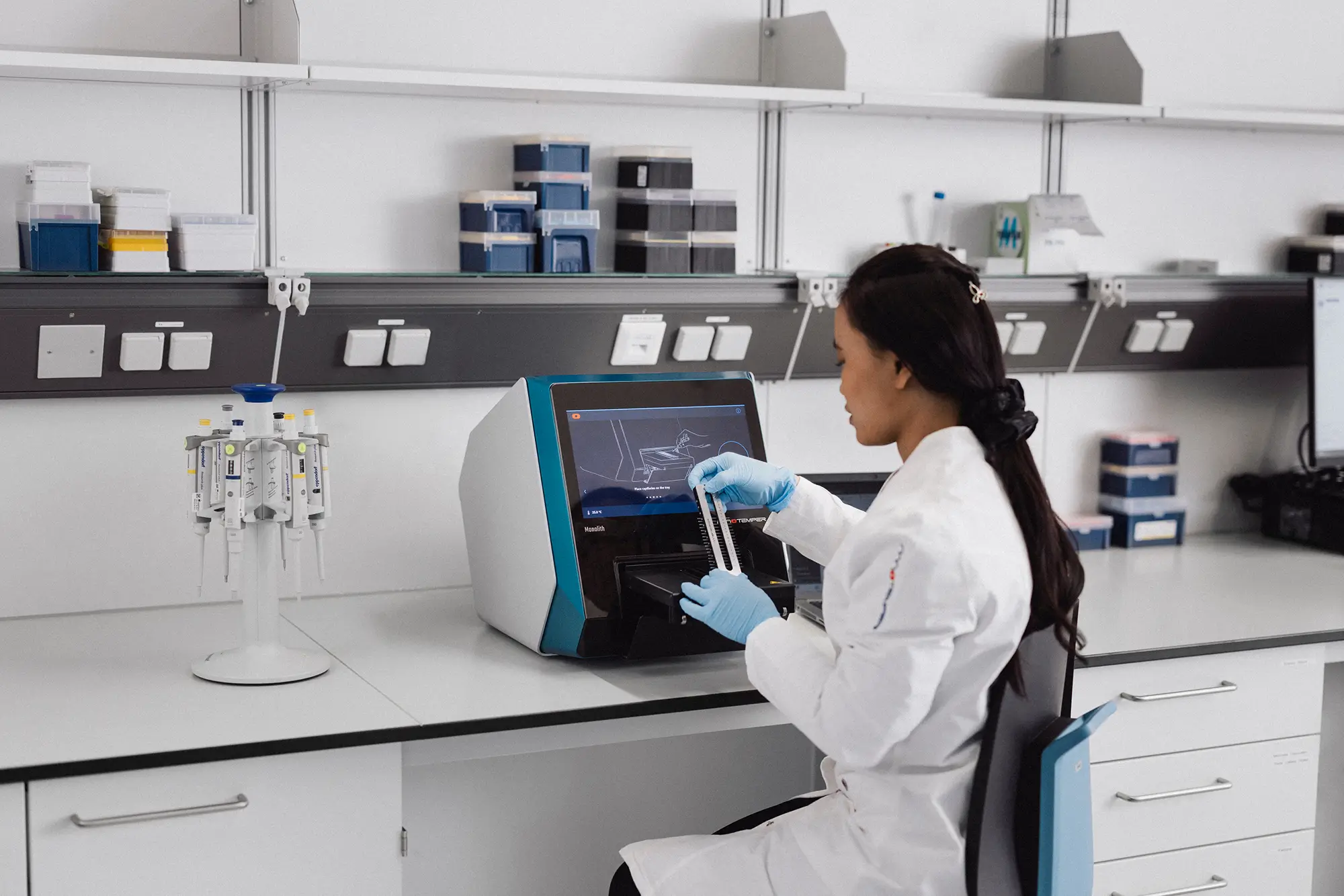


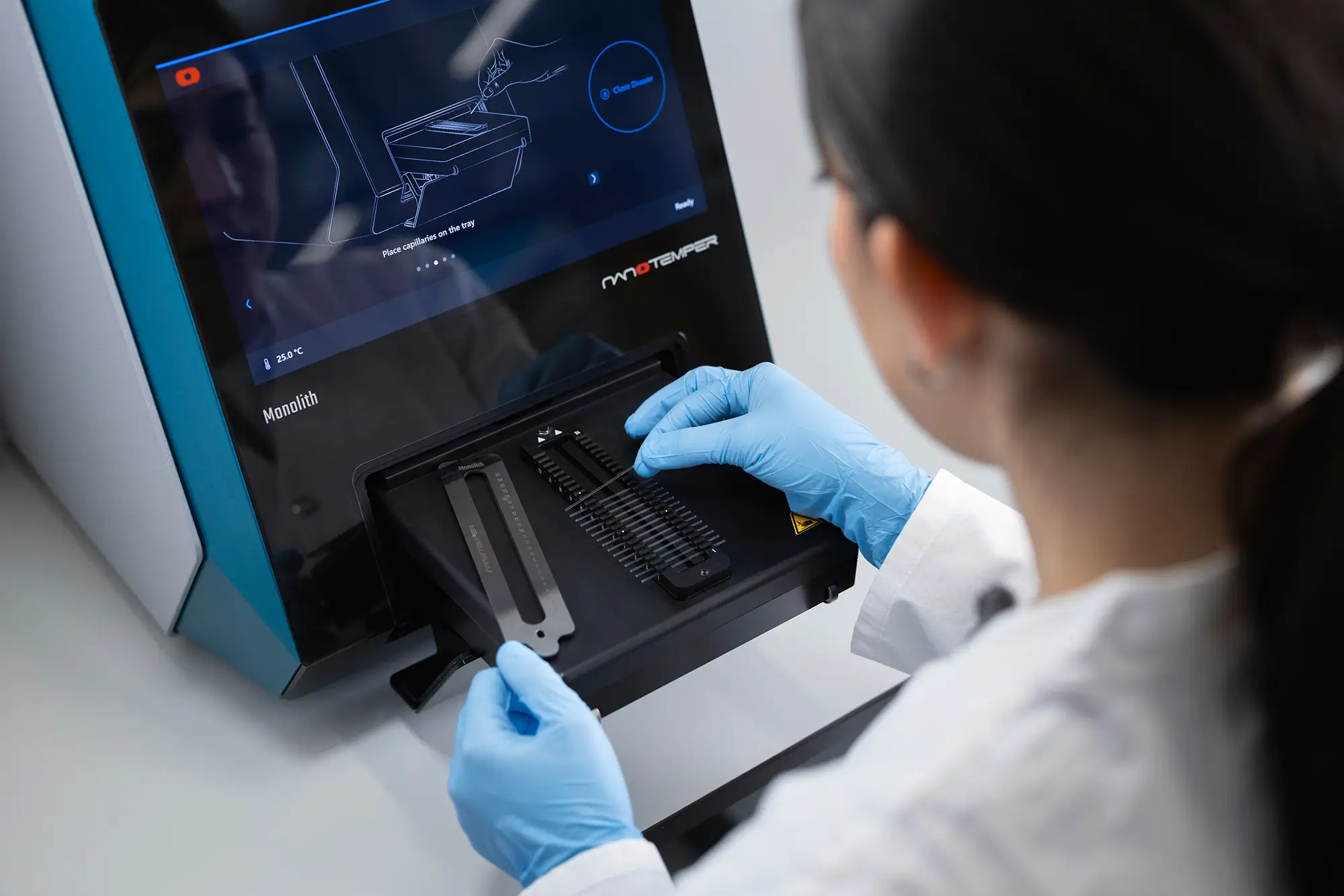
NEW: Kinetic profiling in solution starts with Monolith Omni

Find out more

Monolith Omni

More answers.
Less complexity.

Complete interaction characterization in solution, even for targets that are difficult to study. Monolith Omni combines affinity, kinetic rates, and ligand-induced stability insight in one 10 µL workflow, helping you characterize membrane proteins, receptors, nucleic acids, molecular glues, degraders, and more without immobilization or mass-transport limitations.

Group 1618866910
Group 1618866911
Group 1618867111

Affinity, kinetics, stability. One workflow.

<p>Compare candidates with more than Kd</p>

Affinity, kinetics, stability. One workflow.

<p>Compare candidates with more than Kd</p>

Compare candidates with more than Kd

Measure affinity together with kinetic rate constants, so you can distinguish candidates that bind with similar strength but different kinetic profile and residence time.

<p>Study fast interactions in solution</p>

Study fast interactions in solution

nanoTAK supports fast kinetic analysis, including kon up to 10⁸ M⁻¹s⁻¹ and koff up to 2 s⁻¹, without immobilization.

<p>Reduce assay-format artifacts</p>

Reduce assay-format artifacts

Because nanoTAK measures relaxation behavior in solution, kinetic interpretation is not limited by mass transport to and from a sensor surface.

<p>Work independently from molecular weight and size</p>

Work independently from molecular weight and size

Measure affinity and kinetics even when the binding partners differ strongly in molecular weight, without depending on size or mass changes of the complex.

<p>Keep relevant assay conditions</p>

Keep relevant assay conditions

Run studies in physiological, detergent-containing, or DMSO-containing buffers, including conditions incompatible with biosensor techniques.

<p>Strengthen AI-assisted decisions with more complete interaction profiles</p>

Strengthen AI-assisted decisions with more complete interaction profiles

Support data-driven prioritization, interpretation of structure–activity relationships, model refinement, and cross-candidate comparison.

Get broader interaction insight with confidence, even when your sample is limited and your target is challenging.

Scientist

technology tag

Prometheus™ Panta is powered by our unique technologie

DLS enables you to monitor the colloidal stability of your sample. This information helps you optimize your sample by making changes to the sequence or buffer environment, and measuring how those changes impact colloidal stability.

Your challenging targets, finally measurable. 

Monolith Omni enables in-solution interaction characterization in a fluidics-free workflow that is simple to run and easy to maintain. By combining affinity and kinetic analysis in biologically relevant conditions, it helps reduce assay complexity while supporting challenging interactions across diverse modalities. With broad kinetic coverage, low operating burden, and high ease of use, Monolith Omni is designed to deliver richer interaction insight without adding workflow overhead.

Frame 5912
Small molecules and fragments

Detect small-molecule binding without relying on mass change. Small molecules and fragments can be difficult to characterize when the assay depends on a measurable mass shift or surface setup. Monolith Omni measures interactions in solution with mass-independent readouts, helping confirm weak or low-molecular-weight binders under compound-relevant conditions, including DMSO-containing buffers.

Frame 5912
Lead optimization and kinetic ranking

When Kd is close, rank by kon and koff. Add nanoTAK kinetics and ligand-induced stability insight to compare candidates with more than a single parameter.

Frame 5912
Targeted protein degradation and molecular glues

Study challenging degrader and molecular glue interactions, including binary and ternary complex formation, in an in-solution workflow designed to support richer interaction profiling from limited material.

Frame 5912
Membrane proteins and receptors

Work with challenging systems such as receptor and membrane-associated targets where orientation, environment, or surface immobilization may influence the result. Monolith Omni helps characterize interactions in solution with a workflow built for difficult samples.

Frame 5912
Nucleic acids and RNA binders

Characterize protein–nucleic acid, RNA–ligand, and other nucleic-acid-associated interactions in solution, helping preserve conformational flexibility and reduce assay-format constraints.

Frame 5912
SPR-challenging kinetics

For interactions complicated by immobilization, mass transport, DMSO correction, or large molecular-weight differences between binding partners, nanoTAK provides a solution-based kinetic workflow designed to extract kon and koff without relying on a sensor surface.

Multi-parameter characterization. One platform. Free in solution.

Monolith Two complementary technologies 1

Multi-parameter characterization. One platform. Free in solution.

Multiple insights.

Spectral Shift

Isothermally detects direct target engagement, independent of the binding site by measuring shifts in the emission spectrum of a fluorescently labeled target. Derives affinity constants from the ratiometric signal with sub-nanometer sensitivity that catches the binders other platforms miss.

nano Temperature Alteration Kinetics (nanoTAK)

Uses a precise laser-induced temperature jump to perturb the binding equilibrium. Relaxation to the new equilibrium is monitored in real via Spectral Shift. A global model fit yields rate constants in-solution, delivering insights into molecular binding kinetics.

nano Laser Induced Stability Analysis (nanoLISA)

nanoLISA detects unfolding and early aggregation by heating samples up to 95°C while monitoring spectral shifts. Unfolding alters the fluorophore’s environment, producing a clear sigmoidal curve. Ligand binding shifts this curve, showing stabilization through covalent and non-covalent interactions. Comparing thermal melting profiles with and without ligand enables orthogonal hit confirmation and deeper insight into binding.

Temperature Related Intensity Change (TRIC)


Measures fluorescence changes after a brief temperature increase. Confirms hits with an orthogonal signal and reveals ligand-induced effects like aggregation behavior.

Join the Newsletter

Get email updates. Your edge in biophysics. Subscribe today.

Privacy Policy(Required)

Complete your setup.

Monolith Consumables 1

Simple setup.
Consistent performance.

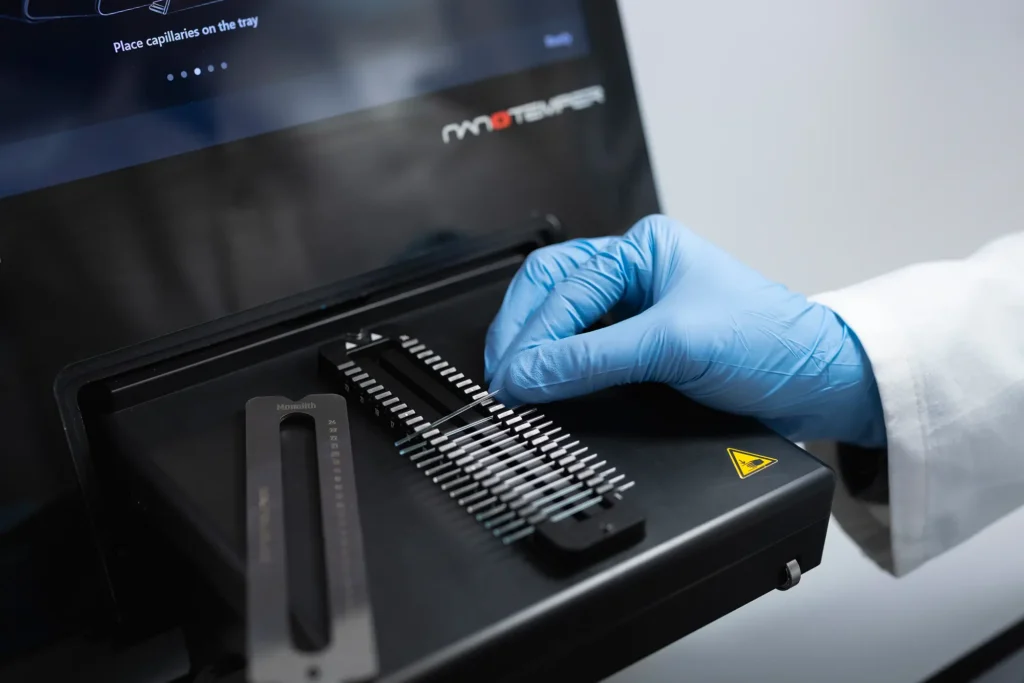
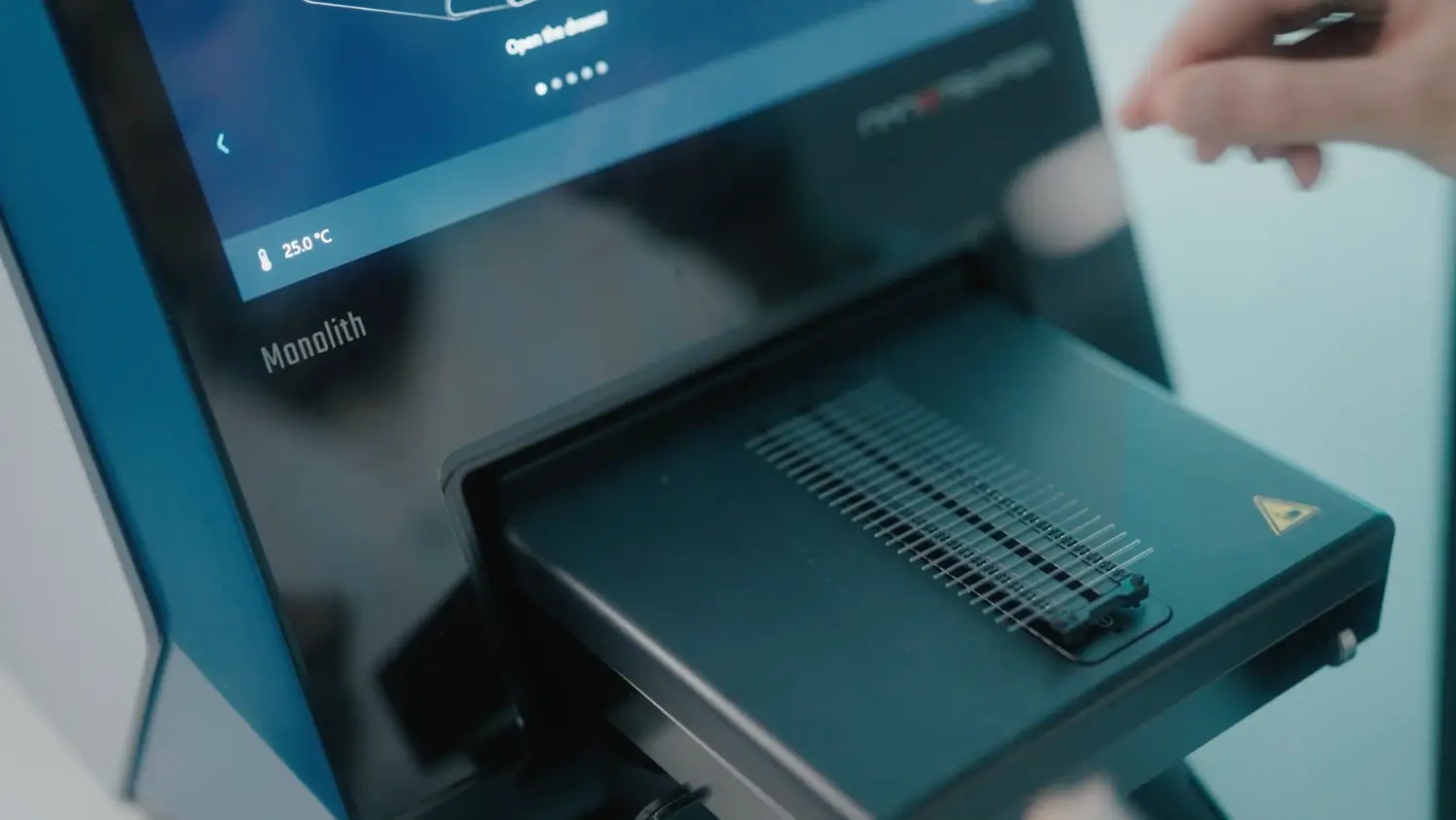
Monolith Omni uses a capillary-based workflow designed to keep sample handling straightforward. High-quality capillaries support reproducible measurements, helping you generate reliable interaction and qualitative stability insight with less preparation overhead.

Monolith Software 1

Software that's easy to use and easy to learn.

Getting started with affinity measurement is simple with Monolith software. Control software is designed for easy, customizable set-up of experiments and allows you to view data acquisition in real time. Powerful Analysis software enables you to sort, highlight, and get insight into aggregation. All software has a clean interface and intuitive user experience, so you’re ready to get started as soon as your Monolith fires up.

Monolith Services 1

Maximize instrument performance.
Without the Downtime . 

NanoTemper instrumentation is built to the highest standards of quality and reliability; however, it’s important to keep your instruments in good working order to ensure accurate, high-quality data output. Don’t let unexpected delays slow you down or interrupt your lab workflows. Service offerings include: relocation services, operational qualification procedures, and full coverage repair and validations.

FAQs

Monolith

What can Monolith Omni measure?

Monolith Omni combines affinity, kinetics, and qualitative stability in a single workflow. This helps researchers build a broader interaction profile by measuring binding strength, adding kinetic context, and assessing ligand-induced stability effects from the same experimental workflow.

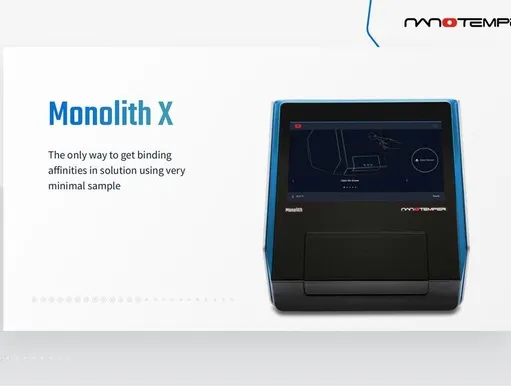
How is Monolith Omni different from Monolith X?

Monolith Omni builds on NanoTemper’s proven Monolith platform by extending beyond affinity measurement alone. In addition to in-solution affinity analysis, it adds kinetic and qualitative stability insight to help researchers interpret molecular interactions more completely.

What does 'one workflow' mean in practice?

Monolith Omni brings multiple interaction parameters together in a single experimental workflow, reducing the need to switch between separate methods for affinity, kinetic, and stability-related insight. This helps lower workflow complexity, preserve sample, and simplify interpretation.

Does Monolith Omni support high throughput?

Monolith Omni is designed for rich, multi-parameter interaction characterization rather than high-throughput screening. It is best suited for applications where depth of insight, limited material use, and simplified workflow matter more than maximum screening scale.

When should I choose Monolith Omni?

Monolith Omni is a strong fit when affinity alone is not enough and you need additional kinetic and qualitative stability context without adding multiple separate assays. It is especially valuable for challenging targets, diverse molecular modalities, and experiments where sample is limited.